


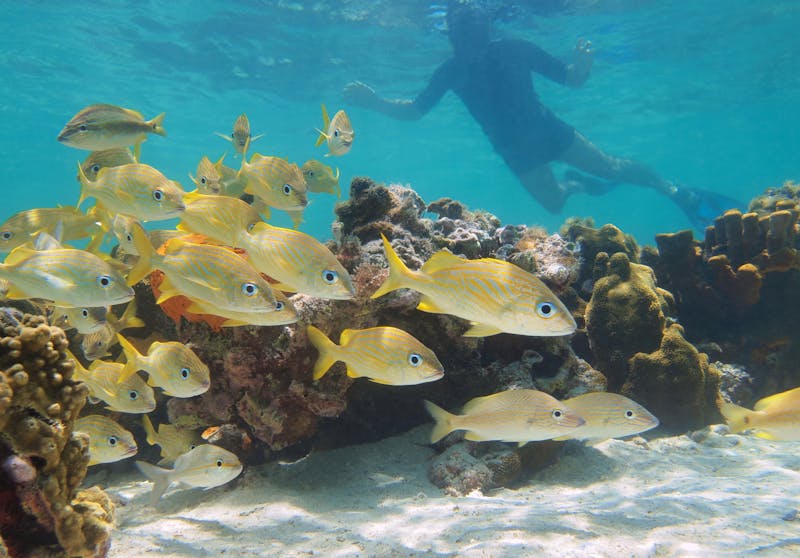
What was marketed as a panoramic, “breathe-easy” window into the underwater world has instead become a potential death trap for unsuspecting swimmers.
On March 5, 2026, the U.S. Consumer Product Safety Commission (CPSC) issued an urgent warning to immediately stop using OUSPT full-face snorkel masks following reports of labored breathing, loss of consciousness, and allegations that the masks caused a drowning fatality. The warning states that carbon dioxide (CO2) buildup in the masks can “exacerbate the difficulty of breathing.” While the 84,000 OUSPT masks sold on Amazon from March 2019 through February 2026 are the current focus of federal scrutiny, they may represent a “canary in the coal mine” for millions of snorkelers using other brands of full-face gear.
Design Flaws: The Risk of Rebreathing Carbon Dioxide
Unlike traditional snorkeling gear that uses a separate mask and mouthpiece, full-face snorkel masks cover your entire face in a single, integrated unit. These masks allow snorkelers to breathe through both their mouth and nose, whereas traditional equipment restricts breathing to the mouth through a snorkel tube.
Full-face snorkel masks are designed with internal valves to separate inhaled and exhaled air. However, research shows that these seals do not always function perfectly—especially if the mask does not fit properly. When the seal fails, exhaled air can become trapped in the mask’s large “dead space,” leading to the rebreathing of CO2.
As CO2 builds up, the body can experience “air hunger,” a distressing sensation of not getting enough oxygen. This can quickly lead to shortness of breath, dizziness, confusion, and in severe cases, loss of consciousness. These risks are heightened during physical exertion or heavy breathing.
According to a study conducted by the Hawaii Department of Health, full-face snorkel masks may also include additional safety concerns beyond CO2 rebreathing.
In 2019, the Department of Health launched a Snorkel Safety Study to investigate a rise in snorkeling-related deaths occurring in calm conditions without obvious distress. The increase coincided with the growing popularity of full-face snorkel masks following their introduction in 2014.
Data from Hawaii showed 82 snorkeling-related drownings between 2010 and 2014. After widespread adoption of full-face masks, that number rose to 114 between 2015 and 2019.
The study identified several “adverse features” of full-face masks:
- Difficulty removing the mask quickly in emergencies
- Inability to spit out a mouthpiece
- Inability to clear water using forceful exhalation
- Unsafe for diving below the surface
- Risk of valve malfunction leading to aspiration
Due to these concerns, some snorkeling retailers, tour operators, and resorts—particularly in Hawaii—have stopped offering full-face masks altogether.
Despite this, many consumers continue purchasing them online through platforms like Amazon, Temu, and eBay, often unaware of the risks.
The Human Cost of Full-Face Snorkel Masks
In September 2016, Nancy Peacock—an experienced swimmer and avid snorkeler—died while snorkeling in Hawaii using a full-face mask she had purchased online. She had even practiced with the mask in a pool prior to her trip.
She was found floating face-up less than an hour after entering the water. Her mask had been partially removed, suggesting a possible emergency. Her husband later wrote that this detail indicated “something went wrong, suddenly.”
Unfortunately, the mask itself went missing after the incident and was not examined as part of the investigation. In response, Peacock’s husband advocated for improved data collection on snorkeling equipment involved in drowning incidents.
Survivor Reports Highlight Serious Risks
Reports submitted to SaferProducts.gov provide additional insight into the dangers of full-face snorkel masks:
- A snorkeler reported the mask suctioning tightly to her face, making it difficult to breathe and nearly causing her to black out.
- An experienced snorkeler became exhausted and breathless while swimming, later reporting blue lips after removing the mask.
- A former lifeguard lost consciousness due to CO2 buildup and required emergency medical treatment.
- A 60-year-old snorkeler lost consciousness after experiencing breathing difficulty and was hospitalized with CO2 poisoning.
- A couple nearly passed out in calm water and had to be assisted back to shore.
Additional reports involve children experiencing nausea, vomiting, headaches, and even loss of consciousness while using these masks. In several cases, adult intervention prevented tragedy.
In a voluntary survey included in the Hawaii study, 37% of participants who experienced snorkeling distress were using full-face masks. Many stated they would not use them again.
What Should You Do If You Were Injured?
Daniel J. Mann, a shareholder at Feldman Shepherd, recommends contacting an attorney experienced in product liability litigation if you suspect a full-face snorkel mask caused serious injury or death.
According to Mann, products must be safe for both intended and reasonably expected use. He believes full-face snorkel masks may pose inherent safety risks and should be carefully scrutinized.
Mann, along with Alan M. Feldman and Edward S. Goldis, has secured substantial recoveries in defective product cases.
Notable results include:
- Nearly $100 million recovered for families affected by IKEA dresser tip-over incidents
- $48 million settlement for burn injuries caused by a defective water dispenser
- $18.3 million settlement involving a fatal house fire caused by a heater
- $15 million recovery for an industrial amputation injury
- $13.5 million for a child fatality involving defective furniture
- $8 million settlement for paralysis caused by a defective tree stand
- $8 million and $7.25 million settlements for infant suffocation cases
- $5.45 million settlement for a fatal industrial accident
- $5 million settlement for another industrial amputation injury